
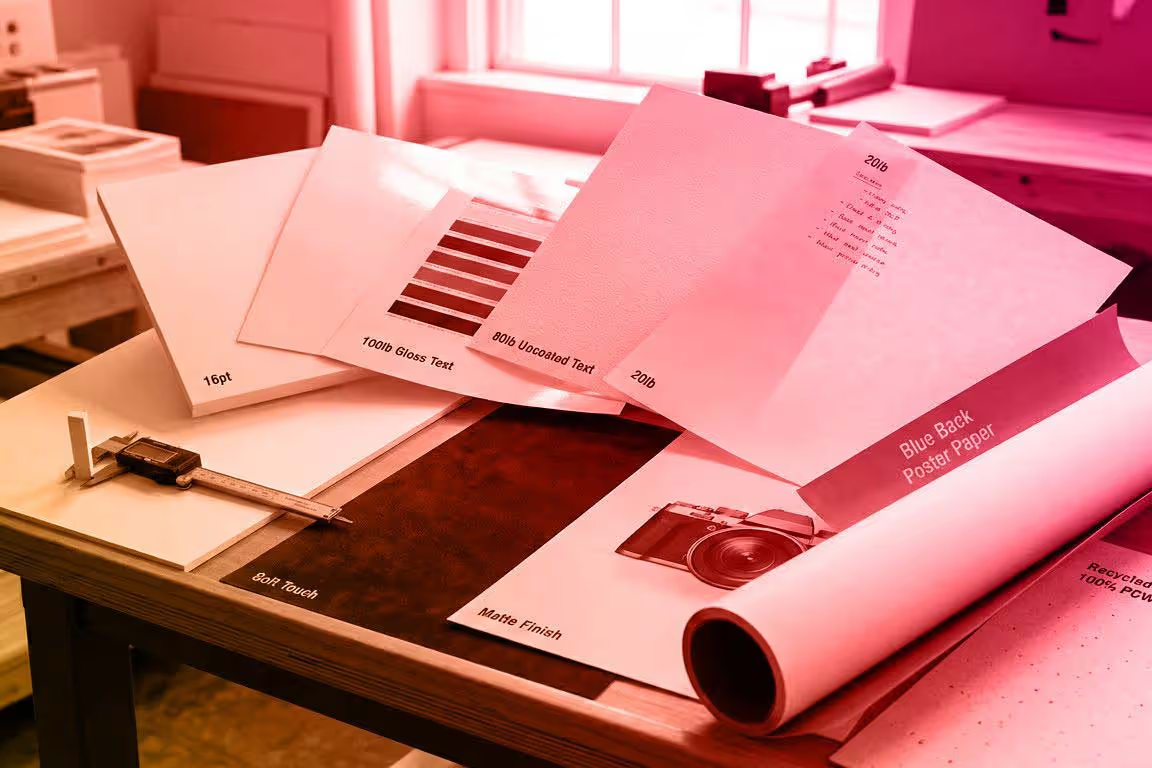
Variety of paper options
Portrait, landscape or square sizes
Saddle stitched or perfect bound
From $51.30
Booklets
Configure now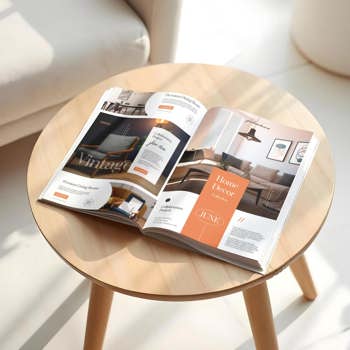
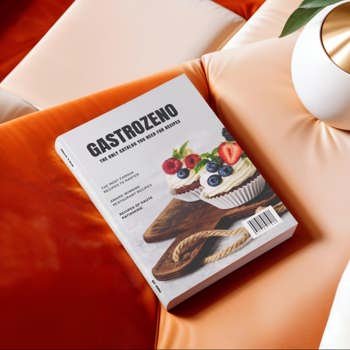

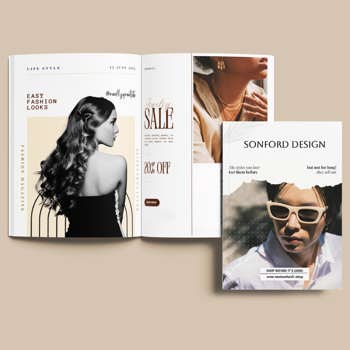
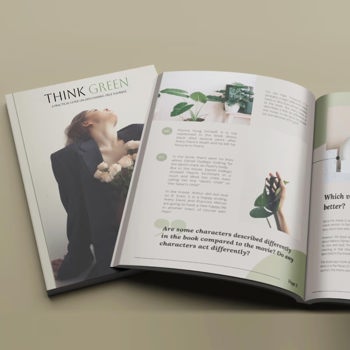

Design and print stunning product catalogs tailored exactly to your business needs today. Our team is here to help you create a memorable print material that will impress your target audience. Start customizing your unique catalogs and get:
Not Sure How to Get Started?
For most of our products we offer design services for an affordable flat fee.
Let our professional designers help you to create a lovely file for you - guaranteed optimzed for our print workflow with no surprises.
Read more about our design services
Add Your Product to the Cart NowCustom Catalog Printing Services
Design and print stunning product catalogs tailored exactly to your business needs today. Our team is here to help you create a memorable print material that will impress your target audience. Start customizing your unique catalogs and get:

Receive This Quote as PDF
To receive a detailed quote, please fill out as many fields as possible.
The PDF document will be sent by email, please ensure the provided email address is correct.

Whether you sell products or services, a printed catalog puts your full range directly into your customers’ hands.
From seasonal retails lookbooks and wholesale price lists to mail-order catalogs and service menus, our custom catalog printing services help you showcase every item with rich detail.


Select your catalog's size, paper, and binding options in our configurator, then review production time and the estimated delivery time.

Click “Add to Cart & Upload Your File” to submit your artwork. For multiple versions, duplicate the item and edit details.

Download your free PDF proof to ensure your premium quality catalog looks exactly as expected and complete the checkout process.
Ensure your file matches the selected size and orientation (portrait or landscape). If your file differs from the ordered size, it may be resized automatically unless you add the Trim to Custom Size service.
The total number of catalog pages must be a multiple of 4 (e.g., 28, 32, 36 pages, including covers). If necessary, blank pages can be added during upload to reach the required total.
Prepare your document as single pages only, in reading order:

Please ensure your catalog's file has the following dimensions:
Use CMYK only. Files in RGB or with spot colors will be automatically converted, which may cause colors to appear different from the original catalog file.
The total ink coverage (C+M+Y+K) must not exceed 300% to ensure proper drying and prevent pages from sticking.
Image resolution of catalogs needs to be a minimum of 150 dpi (recommended 300 dpi) to ensure sharp, high-quality results. Avoid low-resolution or pixelated images.
Use PostScript fonts for offset printing. If TrueType fonts are used, convert them to outlines (also known as paths or curves) to avoid rendering issues.
Export your artwork as PDF/X-3 for the best color accuracy and reliable printing results. Alternatively, you can send us JPEG or TIFF files. Adobe Photoshop users should always save their files as JPEG or TIFF. If a Photoshop PDF is required, please use Acrobat Distiller to create the PDF (you may download our Acrobat JobOptions further down this page). Please never save a PDF directly from Photoshop.

Use our blank templates here. These include the bleed, safety margins, color profile, and page layout.
Please first choose a size from the calculator to see the according templates here.
{{{downText}}}
Catalogs and booklets share the same core structure. Both have multiple pages, folded and bound, and sometimes the terms are used interchangeably, which can add confusion.
Technically, a catalog is a type of booklet, but with a higher page count and a more substantial cover. Due to its higher page count, catalogs have a perfect-bound spine.
Here’s how catalogs and booklets compare:
Feature
Catalog
Booklet
Primary Purpose
In-depth product showcases, lookbooks, and reference publications
Concise information, guides, programs, and promotional materials
Page Count
Often 36 pages or more, thicker and more substantial
Generally 8 to 48 pages, lighter and more compact
Cover
Usually a "Real Cover" (uses a thicker, more durable card stock)
Often a "Self Cover" (cover paper is the same weight as the interior pages)
Common Use
Retail (or other product) catalogs, seasonal lookbooks, wholesale inventories, service menus, magazines
Event programs, manuals, training guides, short annual reports, and course overviews
Binding Method
Typically perfect binding (pages glued to a flat spine)
Typically saddle stitching (stapled along the center fold)
Design Priority
Spine width must be calculated based on page count and paper thickness
Page margins and the gutter (area near the binding) are critical to avoid content loss
If what you need is product-driven, inventory-heavy, or lookbook-style, a catalog would be the right choice. This is especially the case when you need a print product that benefits from real cover and a perfect binding that holds up for repeated use.
On the flip side, if your print project is lighter, more informational or focused on a single topic or event, take a look at our booklet printing instead.
We offer two high-quality binding options for printing catalogs:

Pages are folded and stapled along the center, ideal for lightweight custom catalogs. This option is not typical for catalogs but could be an option if your catalog has fewer pages.

Pages are glued to a square spine, ideal for thicker custom catalogs and premium publications. With perfect binding, a separate spine file is required, with width based on page count and paper type.
Custom catalogs allow product and service-based businesses to present their complete range of offerings in a single, easy-to-browse publication.
Here are the industries they are most effective in:

Display full product lines and specialty collections on thick, premium paper that reflects the quality of the products themselves. High-fidelity printing and a substantial real cover showcase luxury before a customer even reads a word.

Showcase full product ranges, seasonal collections, pricing, and specs to drive both online and in-store sales. A printed catalog keeps your brand in the customer's hands long after they've closed the browser tab.

Provide detailed listings of parts, materials, SKUs, and bulk items for secondary businesses to order from. Highlight wholesale catalogs for hardware components, supplies, and industrial goods in an impressive way.

Present impressive, room-by-room product displays with dimensions, finishes, and styling options. In this case, home improvement and furniture companies usually use catalogs to inspire customers and help them visualize how products will look in their space.

Present complete menus, hotel amenities, or wholesale food inventories to streamline decision-making. Restaurants, catering providers, and hotels use catalogs to help both guests and B2B buyers quickly explore, evaluate, and act on every available option.

Showcase priced breakdowns of spa treatments, medical procedures, and wellness packages in a catalog format for clients to browse, compare, and book specific services.
Every custom catalog order is produced using eco-conscious processes, and when you want a fully sustainable catalog, you can simply select a recycled stock in the configurator, and all without compromising on quality.
Our configurator offers a range of paper choices, including fully recycled options for both your interior pages and your cover.
If you choose recycled, your catalog is printed on stock made from reclaimed fibers, giving you a sustainable end product that still feels premium in the customer's hands.
Whichever stock you select, the printing itself follows the same eco-conscious standards for inks, energy, and waste.
The recycled paper option is available across our full range of catalog sizes and page counts, from 8 to 320 pages—with more eco-friendly choices coming soon.
Whether you need a slim 5.5" x 8.5" lookbook or a substantial 8.5" x 11" perfect-bound retail catalog, choosing recycled paper delivers the same vibrant full-color results with no trade-off in quality or finish.
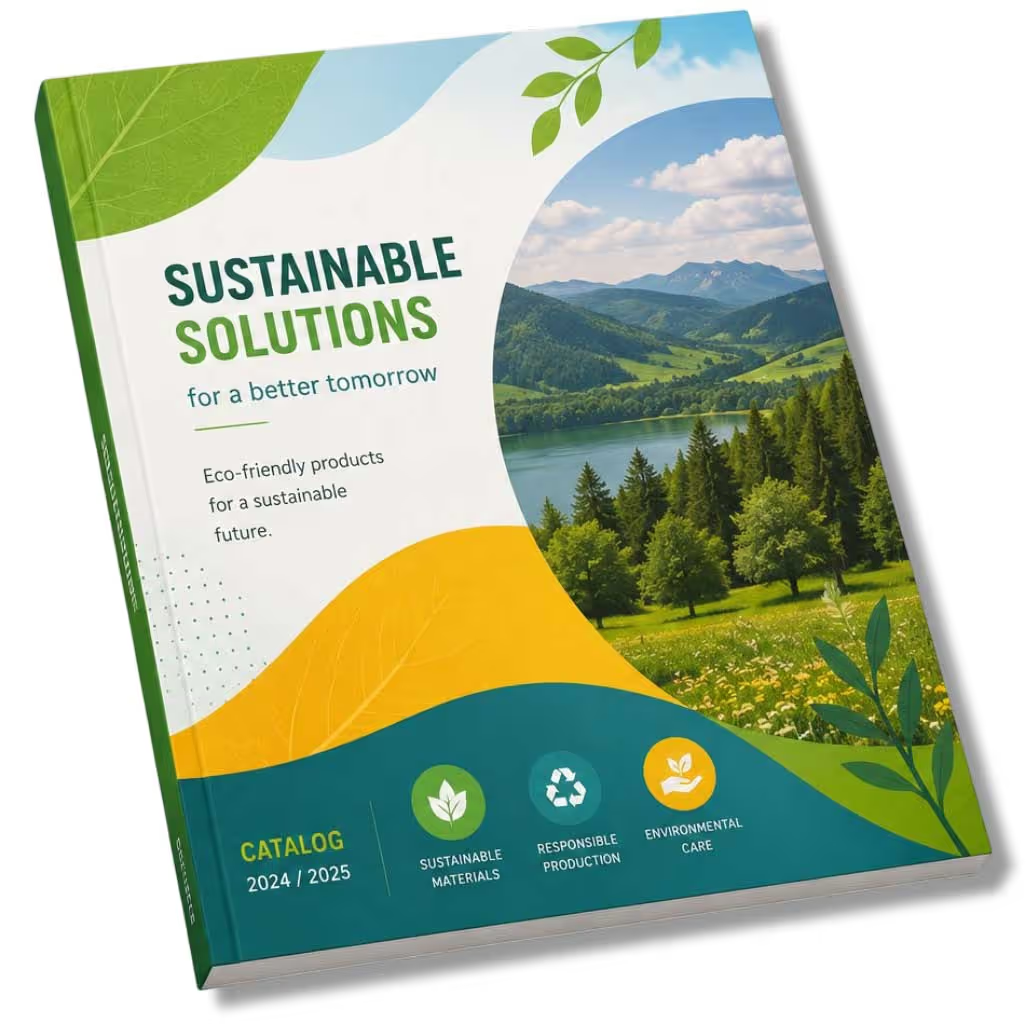
We produce top-quality catalogs using premium materials, precise offset printing, and expert finishing to guarantee consistent, professional results.
Enjoy affordable printing without compromise. Our high quality catalogs deliver premium results at the lowest cost in the industry.
Experience quick production and reliable shipping. We make ordering printed catalogs online fast, efficient, and always on schedule.
Paper choice drives how premium your catalog feels. For standard retail catalogs, a 100 lb or 120 lb gloss text stock makes product photography pop. As for luxury or lifestyle brands, a 120 lb matte interior with a heavy 14 pt to 18 pt matte card cover signals high-end quality.
For large wholesale distributions where shipping cost matters, an 80 lb to 90 lb interior keeps weight down while still reproducing color well. Covers should always feel noticeably thicker than the interior to protect the catalog through repeated browsing.
Gloss gives you richer, more saturated colors and is the traditional choice for retail catalogs where product photography needs to look vivid and commercial. Matte delivers a softer, more sophisticated feel with less glare under lighting, making it the preferred option for luxury goods, home and furniture, jewelry, and premium lifestyle brands. Many retailers use gloss interiors paired with matte card covers to get the best of both.
The most common catalog size is 8.5" x 11" portrait, large enough for strong product photography and standard enough to fit shelves, mailers, and sales kits. 5.5" x 8.5" is popular for compact lookbooks or travel-friendly seasonal catalogs.
Square formats (8.5" x 8.5" or 5.5" x 5.5") are increasingly common for lifestyle, fashion, and jewelry brands because they give you flexibility with photography and stand out on a coffee table.
Upload your file as single pages in reading order, not as printer spreads. Page 1 is the front cover, page 2 is the inside front cover, pages 3 through the second-to-last are your content pages, and the final two pages are the inside back cover and back cover. Blank pages should be saved as blank single pages in the PDF. Our system handles the imposition (arranging the pages for printing) automatically.
Yes, you can design your catalog yourself or have your agency do it. Prepare the file in CMYK (not RGB), include 1/10" bleed on all four sides, keep critical content at least 1/12" inside the trim edge, and use images at a minimum of 150 dpi, with 300 dpi recommended for product photography. Export the final file as PDF/X-3 for the best color accuracy. Our free design templates come with all these specifications built in.
Offset printing uses metal plates and ink rollers to print large runs with excellent color consistency and a lower per-unit cost at scale, and it is our primary method for catalog printing.
Digital printing applies ink or toner directly from a digital file, which makes it faster and more economical for very small runs or samples but typically shows slight color and finish differences compared to offset. Your main catalog run will almost always be printed on offset.
We offer saddle stitching and perfect binding. Saddle stitching is most cost-effective for catalogs under 48 pages and opens completely flat, which can help for browsing. Perfect binding glues pages to a flat spine, creating a more substantial, book-like feel that is standard for retail catalogs of 48 pages or more. Perfect binding also gives you a printable spine, useful on retail shelves, B2B sales kits, and in-store displays.
Saddle stitching is a binding method where folded pages are stapled along the center fold. It is the most economical option, produces a clean flat-opening result, and is well-suited to thinner catalogs such as short promotional lookbooks, seasonal mini-catalogs, or wholesale flyers. Saddle stitching works best for publications under 48 pages, as beyond that, perfect binding gives a more durable, premium finish.
Overall, printed catalogs drive measurable sales lift by giving customers something tangible they can browse at their own pace, away from the distractions of a screen. They linger on coffee tables and desks for days or weeks, keep your brand in front of the customer, generate stronger brand recall than digital ads, and are especially effective at re-engaging lapsed buyers. And that's why retailers consistently report that print catalogs lift both online and in-store sales among households that receive them.
Turnaround time covers production only, including printing, binding, trimming, and quality checks, from the moment your file is approved to the moment catalogs leave our facility. Shipping is separate. Our live calendar in the configurator shows production time, shipping time, and your total estimated delivery date together, so you can plan around product launches, seasonal drops, or trade shows accurately.
Every product catalog should include clear product imagery, a short description, key specifications (size, material, color options), an SKU, price, and a clear way to order. Organize products in a logical structure that matches how customers shop, whether by category, collection, season, room, price tier, or use case. Place bestsellers or newest arrivals up front, and use consistent photography, typography, and spacing throughout so the catalog feels cohesive.
There is no single ideal page count. It depends on how many products you are showcasing and how you want customers to experience them. A focused seasonal lookbook might work at 24 to 48 pages. A full retail catalog usually sits between 60 and 128 pages. A comprehensive B2B wholesale directory or parts catalog can run 200 or more pages. Let your content volume and budget guide the decision, and remember that total page count must always be a multiple of four.
We offer dropshipping and fulfillment services that can handle distribution from our facility directly to your customers or retail locations, which is useful when you do not want to receive a large pallet and ship it again yourself.
For full direct-mail campaigns including list management, postal processing, and mail merges, you will typically pair our printing with a dedicated mailing center. Contact our support team to discuss your specific distribution needs.
See which products customers order together with catalogs.
Booklets
Configure nowBrochures
Configure nowCD Booklets
Configure nowSign up to our newsletter for all the latest news and our exclusive promotions.

Total: $285.91
Total: $285.91